10 Fun Facts About Coco
1. World Showcase
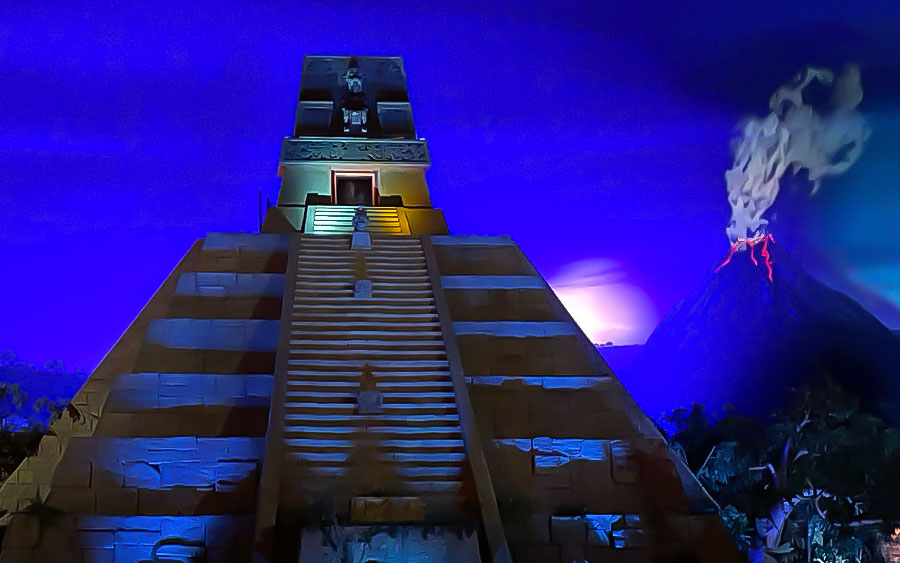
Inspiration for Coco initially came from, of all places, Epcot! When writer-director Lee Unkrich saw the papier mache folk art at Epcot’s Mexico Pavilion, it sparked an idea that led to the creation of this beautiful film.
2. The Day of the Dead
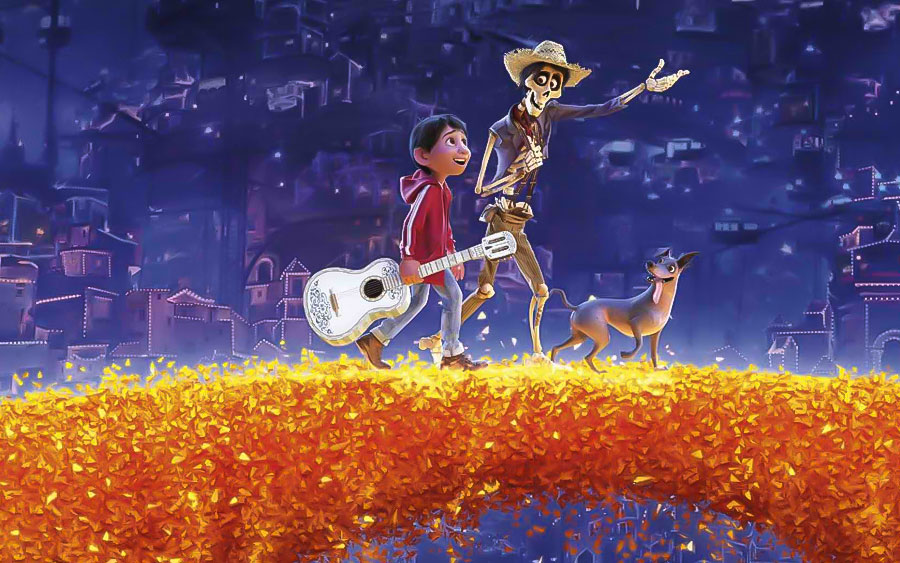
As is usual with any Disney film, the creative team took several trips to Mexico to research this magnificent country’s history, culture, and landscapes. Many of these trips took place during the Dia de los Muertos (Day of the Dead) festivities since that tradition is central to Coco’s story. On one of these holiday trips, the team saw paths of marigold petals strewn from the gravesites to the homes of loved ones. Marigolds have a long history in Mexico: the Aztecs held them sacred, using them for medicine, magic, and decoration. According to Mexican legend, the bright colors and intense aroma of marigolds lead the spirits of the dead home to their families on Dia de los Muertos. This inspired the marigold bridge in Coco, which connects Santa Cecilia to the Land of the Dead.
3. A Fitting Tribute
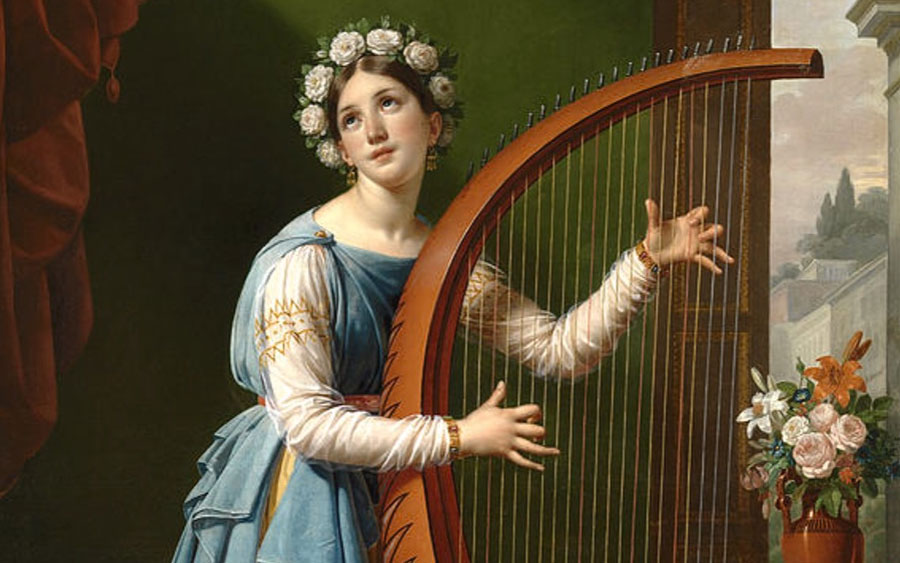
Miguel and his family live in Santa Cecilia, a reference to Saint Cecilia, the patron saint of musicians.
4. That’s Illuminating
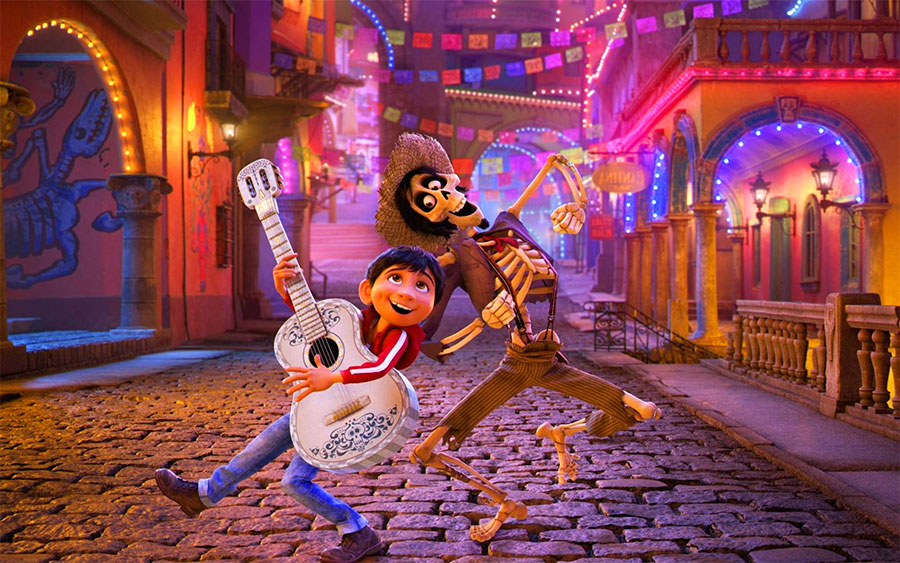
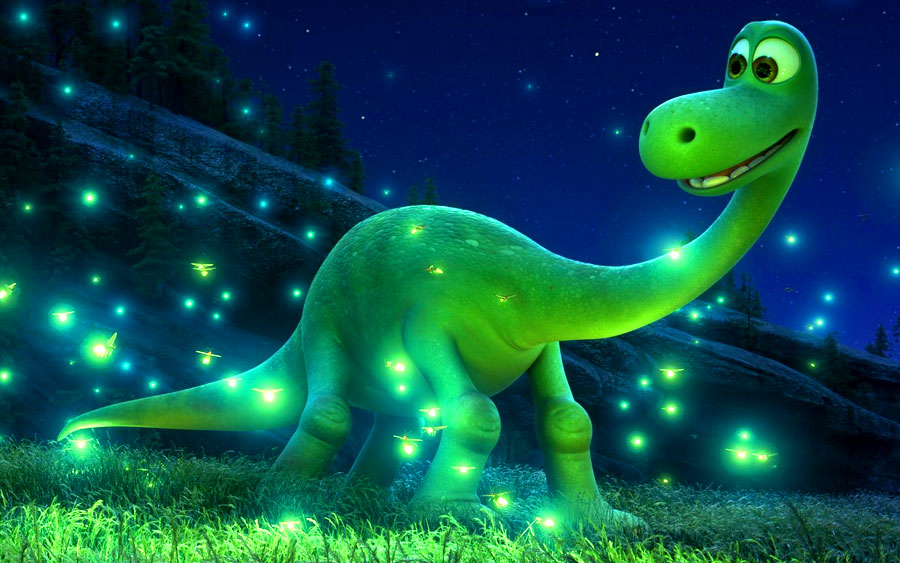
The lighting design for the Land of the Dead segments presented a considerable challenge. 7 million lights were required, by far the largest number ever utilized in a Disney-Pixar film. The film artists modified a code they had constructed for the fireflies in The Good Dinosaur (2015), but instead of having the lights move separately – which is not only very complex but also quite expensive – they were able to treat the streetlights, house lights, and other illuminations as one light, making them far easier to control.
5. Brightness to Darkness
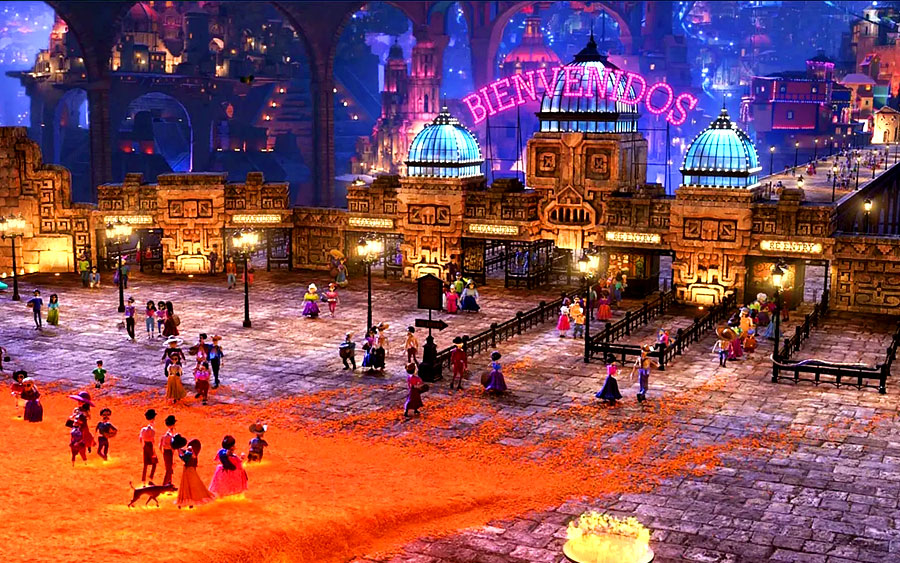
Color was used extensively to highlight the differences between Santa Cecilia and the Land of the Dead. The scenes in Santa Cecilia primarily take place during the day, with many bright colors and shades of white. In contrast, the Land of the Dead is under a night sky, necessitating a much darker (but still colorful) palette.
6. How Do You Bring a Skeleton To Life?
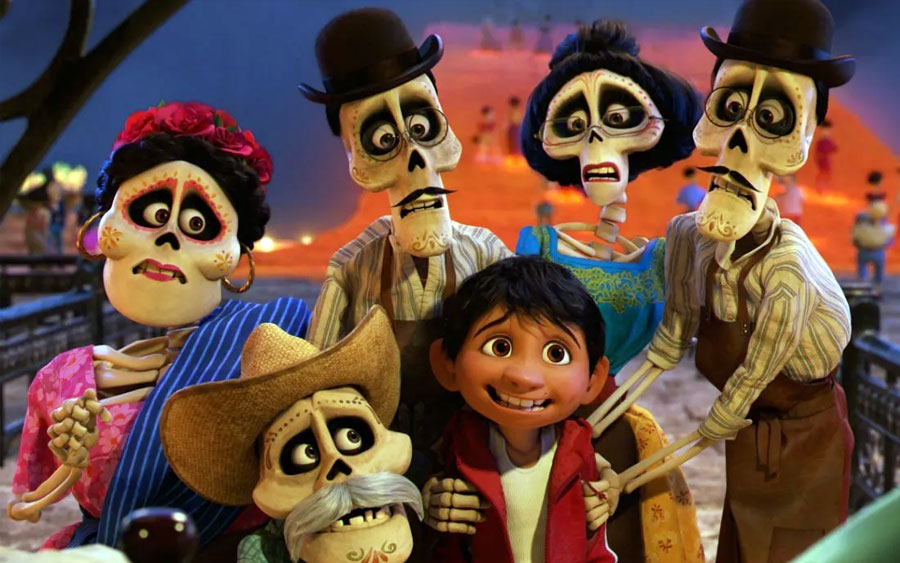
Animating the film’s skeletons proved especially difficult. Animators typically convey personality and emotion through facial expressions, which are rather difficult to achieve when your subject has no muscles or flesh! The solution was found in the folk art found in Dia de los Muertos celebrations and the use of face paint. In addition to making the skeletal characters more expressive, it also made them far less frightening to younger viewers.
7. Lots of Bones
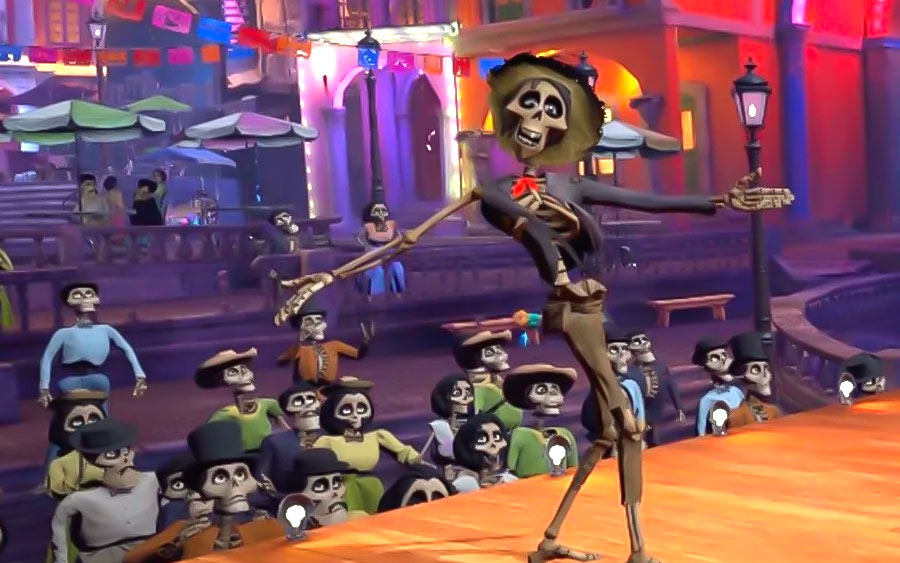
To facilitate the crowd scenes in the Land of the Dead sequences, 80 unique skeletons were created. These were used in varying combinations to bring the crowds to, er, life.
8. Historical Accuracy
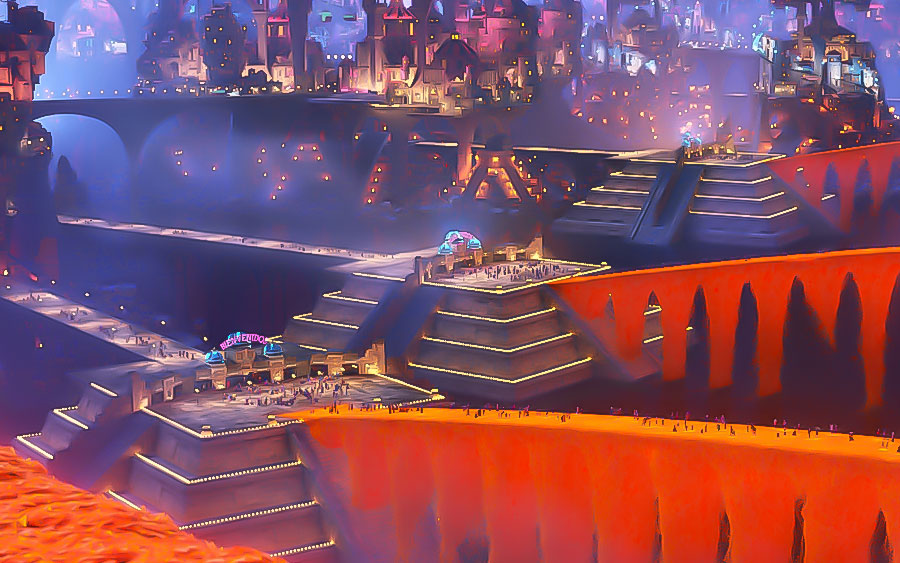
Because the residents of the Land of the Dead go back many generations, several types of architecture can be spotted representing different historical times, beginning with the pyramids and continuing through the present day.
9. Real Life Inspirations
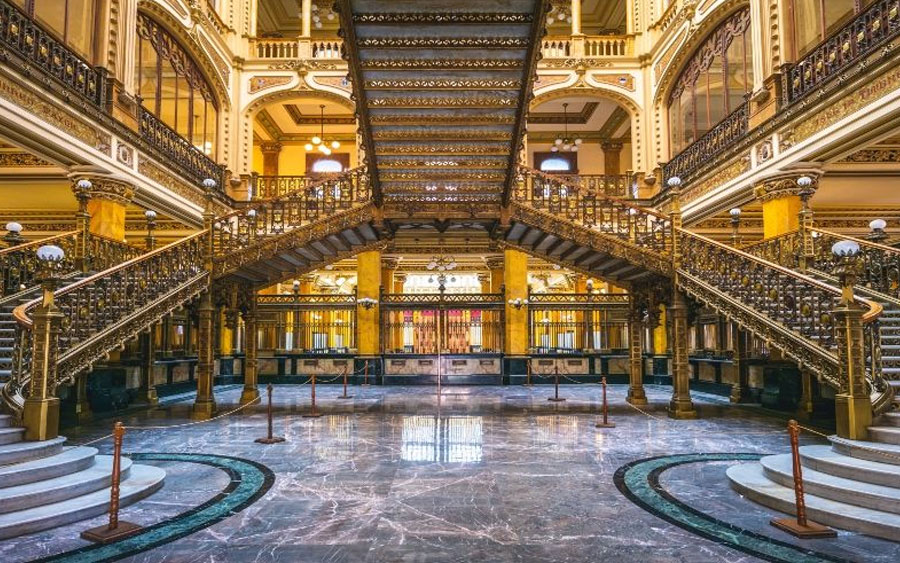
Additionally, actual locations in Mexico inspired the Land of the Dead. For example, Marigold Grand Central (from whence the faithful depart for the land of the living) is based on the trolley system in Mexico City. The station itself is based on Palacio de Correos, the city’s primary post office, which was dedicated by President Porfirio Diaz in 1907. The station’s ornate ceiling was inspired by the intricate stained-glass skylight of the Gran Hotel, originally built as a shopping center at the end of the nineteenth century and adapted into a hotel in 1968, when Mexico City hosted the Summer Olympics.
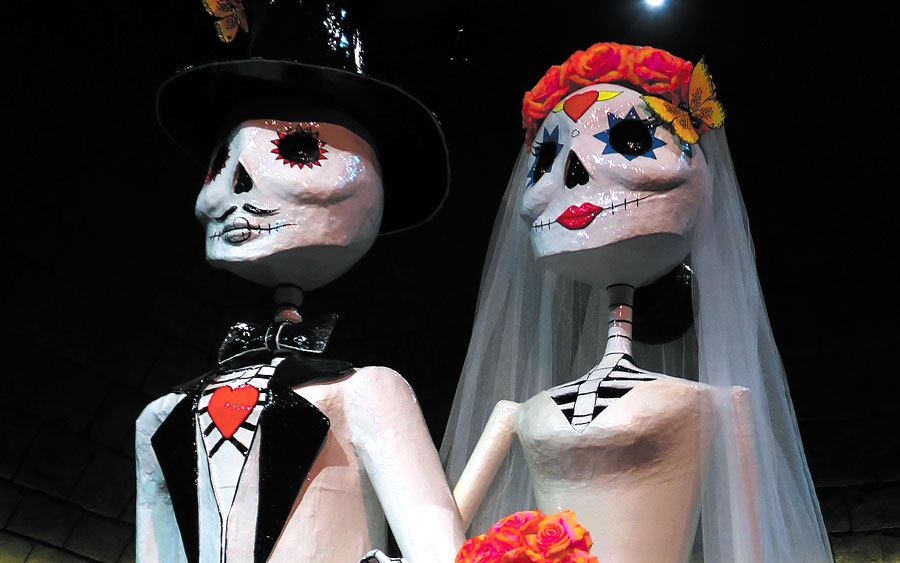
10. The Bridal Couple
Epcot Guests can visit the art exhibit, “Remember Me! La Celebracíon del Día de Muertos,” at the Mexico Pavilion. There you will find customary calaveras (sugar skulls), paper sculptures, and papel picado, a traditional craft in which ornate designs are cut out of colored tissue paper and used as banners on walls. The exhibit’s centerpiece is the “Everlasting Love” sculpture created in 2017 by Felipe Linares Mendoza and Leonardo Vargas. The Bridal Couple symbolizes the love that will endure long after death.
Discover More Disney Magic in the Spring issue of Celebrations Disney Magazine!
Immerse yourself in the magic of Disney with features and pictorials on:
• The Secret Magic of Walt Disney World
• The Stage Shows of Disney
• The Orange Bird
• Pirates of the Caribbean
• Hoppers
and Much More!!
Click here to order!