Visiting the Original ImageWorks at EPCOT’s Imagination Pavilion

It’s sometimes easy to forget, but the Imagination Pavilion actually consists of three components: the attraction itself, the Magic Eye Theater, and ImageWorks (four if you include the surrounding gardens!). In fact, ImageWorks was the only section of the Pavilion that opened along with EPCOT on October 1, 1982. The Magic Eye Theater opened five days later, while the original attraction, Journey Into Imagination, wouldn’t open until March 5, 1983.
ImageWorks was envisioned as an interactive play area for young and old alike. After exploring the wonders of imagination with the Dreamfinder and Figment, it was anticipated that Guests would want to flex their creative muscles. ImageWorks provided park-goers with just that opportunity.
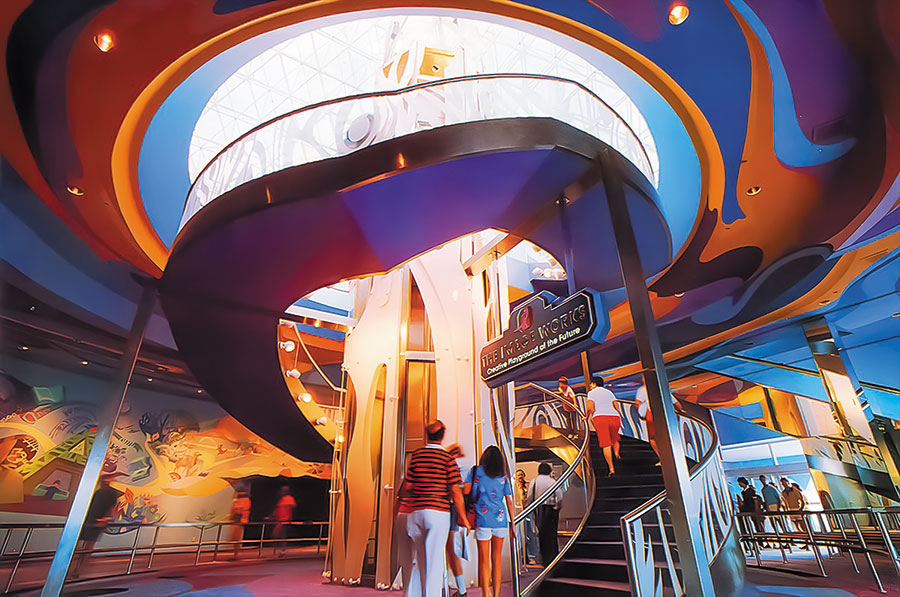
Once you disembarked your vehicle, you were invited up to the second floor to explore, play, and perhaps even learn a thing or two. A spiral staircase stood in the heart of the airy, colorful atrium, and as you looked up, you could see sunlight streaming through the glass panels of the giant pyramid that served as the Pavilion’s roof. To get to ImageWorks, you could climb the spiral staircase, take the elevator, or ride the escalator to the second floor of the Pavilion.
Once you made your way upstairs, the first exhibit you encountered was “Bubble Music,” sometimes referred to as “Liquid Projection” Using a pad, you could create bubbles in multicolored tanks, and as you did, they would play different sounds. Light passing through the colored bubbles was then projected onto the wall of a smaller pyramid (hence the name “Liquid Projection”).
Moving counter-clockwise around the floor, you would next come to “Dreamfinder’s School of Drama.” Here was your chance to be a star! Using chroma-key/green screen technology (which allows you to add any background that you wish to a scene), you could act out one of three stories:
- “Daring Deputies and the Return of Sagebrush Sam” (a western)
- “Acrobatic Astronauts in Galactic Getaway” (a science fiction story)
- “Enchanted Travelers – Wily Wizard and the Cranky King” (a fairy-tale)
Dreamfinder himself joined you in the “film” as one of the characters.
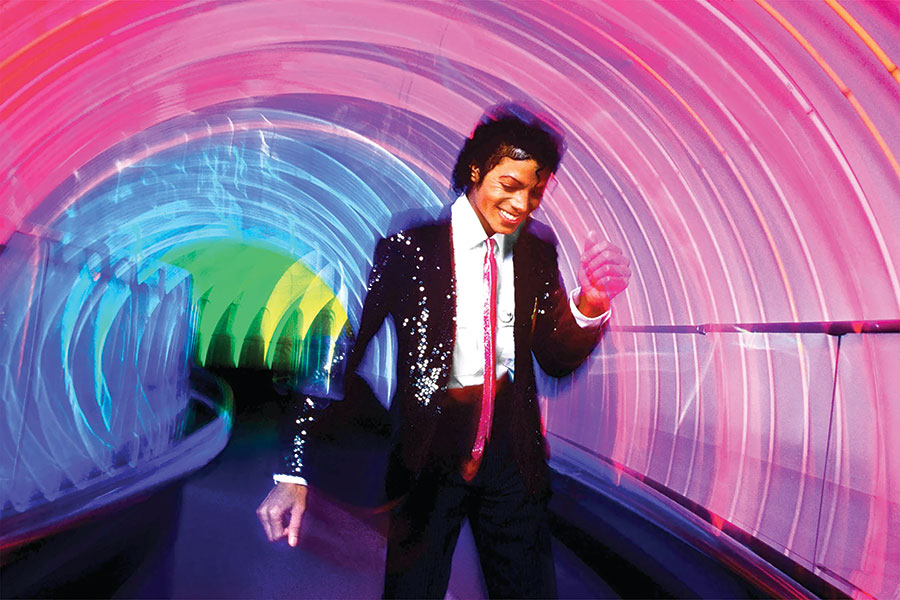
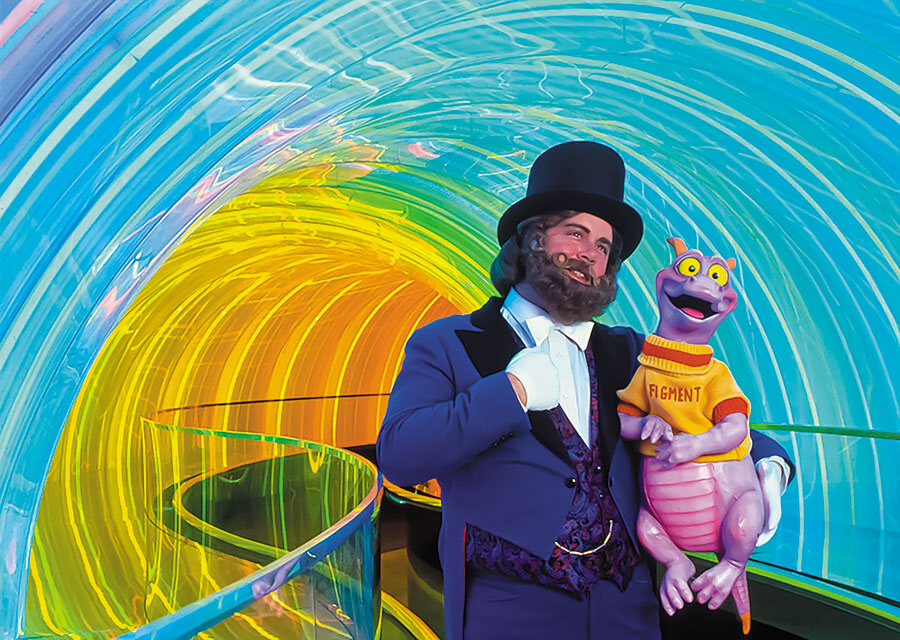
Next was undoubtedly the highlight of ImageWorks: the “It Knows You’re There Sensor” walk-through exhibit, which featured the legendary Rainbow Corridor.
The Rainbow Corridor was a large tunnel lined with a series of neon tubes that lit up in turn as you walked through. The Rainbow Corridor operated in two modes. The primary mode assigned you a color, and that color followed you through the corridor. Unfortunately, that mode didn’t always work as planned, so more often than not, the corridor operated in its basic mode (“show mode cascade”), in which a random pattern of colors continuously flowed through the tunnel.
At one point, a similar tunnel reappeared at Innoventions, albeit in a slightly different form. The original version remained in the abandoned second-floor area for many years but was finally disassembled a few years ago. The Rainbow Corridor is one of the great “lost attractions” in Walt Disney World history, partly because of the high notoriety it gained among Disney fans when Michael Jackson had several promotional photos taken there in the 1980s.
Continuing through the Sensor corridor, you next came upon “Lumia,” a 6-foot-diameter sphere that emitted different tones to create patterns of light and color.
Following that was “Image Warp,” a series of vibrating mirrors (similar to circus mirrors) that would create strange, distorted reflections.
You then got to experience the “Stepping Tones,” which were colored squares that played music as you stepped on them.
The last stop in the Sensor corridor was the “Digital Wall,” which consisted of a bank of lights that would flash as you stood before an invisible wall, giving the wall a computer-like look.
After you exited the Sensor walk-through exhibit, the “Light Writer” station let you draw geometric patterns using laser beams.
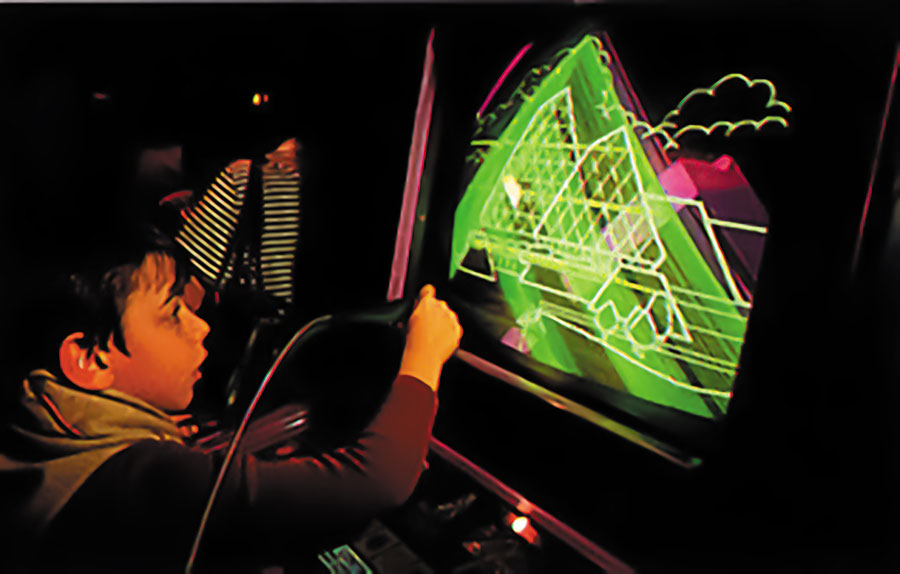
Next up was the “Magic Palette.” Here, you could paint pictures of the Dreamfinder, Figment, or the Pavilion itself using touchscreen technology. Across the room was a giant “Kaleidoscope” that you could manipulate to create amazing designs.
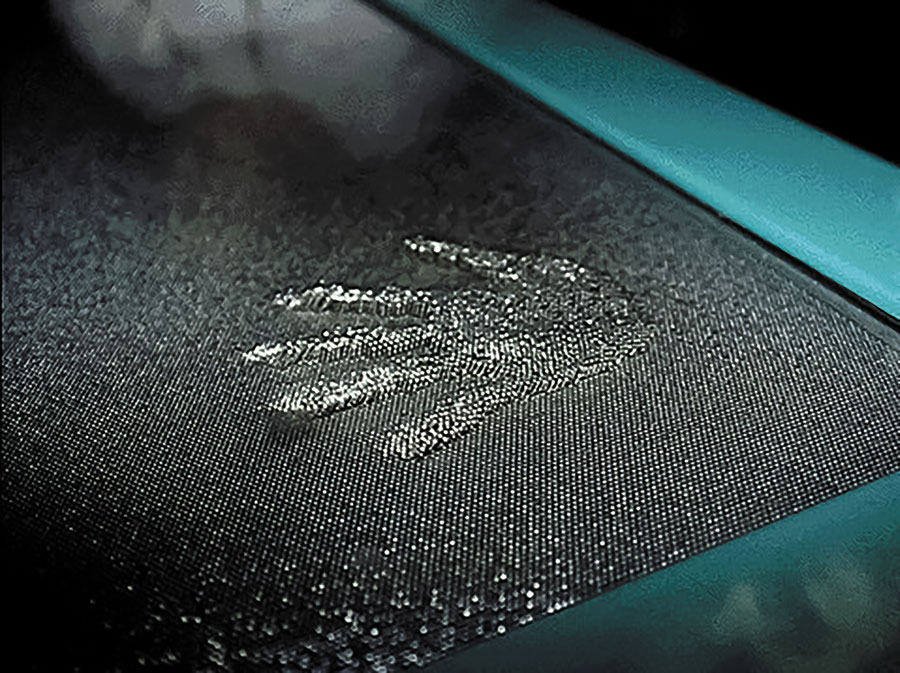
In the space between the “Magic Palette” and the “Kaleidoscope” stood another Guest-favorite, the “Pin Screens.” These were five giant tables that held thousands of pins. As you ran your hands underneath the table, the pins would rise, following the contours of your hand to create mesmerizing shapes and patterns. Precision was of the utmost importance when making the pin tables. For the effect to work smoothly, each pin had to be identical. To ensure this was the case, the artist who worked on the project spent a month at the pin factory in Dayville, Connecticut, inspecting each pin to ensure it was perfect.
The final stop in ImageWorks was the “Electronic Philharmonic,” which gave you the power to control an orchestra with the wave of your hands. Sensors would recognize your hand movements to raise and lower the volume of different sections of the orchestra. When Electronic Philharmonic initially opened, the sensors also responded to the tone of your voice rather than your hand movements, but this was quickly changed.
New Experiences, New Fun
ImageWorks underwent a significant update in 1990-1991. Some of the exhibits were relocated, while others were removed to make way for new interactive experiences.
“Bubble Music” was replaced by “Figment’s Coloring Book.” Here, you could use projected light to color images of Dreamfinder and Figment that hung on the wall. The images were black and white drawings of Figment and Dreamfinder in various situations, such as riding the Dreamcatcher, flying a hot air balloon, and blasting off in a spaceship. There was even an image of Figment holding a giant book called “Monsters” closed, inspired by the Literature scene from the original attraction. You could “paint” these virtual canvases using giant paintbrushes to aim a beam of light at the open spaces, filling them in with different colors and patterns.
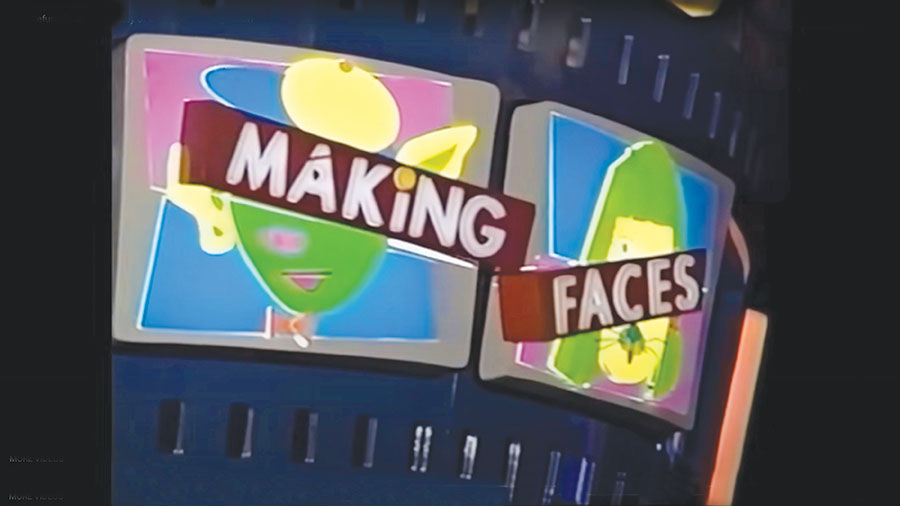
“Dreamfinder’s School of Drama” was reduced to a single stage and relocated to the far wall, where the “Digital Wall” had previously been. In its place arrived “Making Faces.” This consisted of two podiums, each holding five interactive stations. Here, you could take a picture of your face, which would appear on a monitor. You could then alter it with different hairstyles, noses, ears, and accessories.
The “Image Warp” area was removed, and one of the mirrors was moved out into the main hall, adjacent to the new “Making Faces” exhibit.
Elsewhere, “Lumia” was replaced by the “Mirage Room,” which used mirrors to create a 3D image of Figment. The image was so convincing that you would believe you could reach out and touch it. The instant you did, however, it would disappear, revealing itself to be a clever mirage.
The “Digital Wall” was removed in 1991 and was replaced by the relocated “Dreamfinder’s School of Drama.”
Finally, “Lightwriter Station” was replaced by “Dreamfinder’s Balloon Race.” Five anamorphic discs rotated inside a glass table at different speeds. The painted scenes depicted distorted and stretched hot air balloons (including a Mickey balloon). If you watched the mirror, you would see the reflections of the images below perfectly restored to their natural proportions as if by magic. This exhibit featured unique dialogue from Dreamfinder and Figment as they bantered during the race.
Discover More Disney Magic in the Fall issue of Celebrations Disney Magazine!
Immerse yourself in the magic of Disney with features and pictorials on:
• The Carousel of Progress
• The Posters of Disney
• Buzz Lightyear
• Disney’s Contemporary Resort
• The Incredibles
and Much More!!
Click here to order!