10 Fun Facts About The Rescuers Down Under
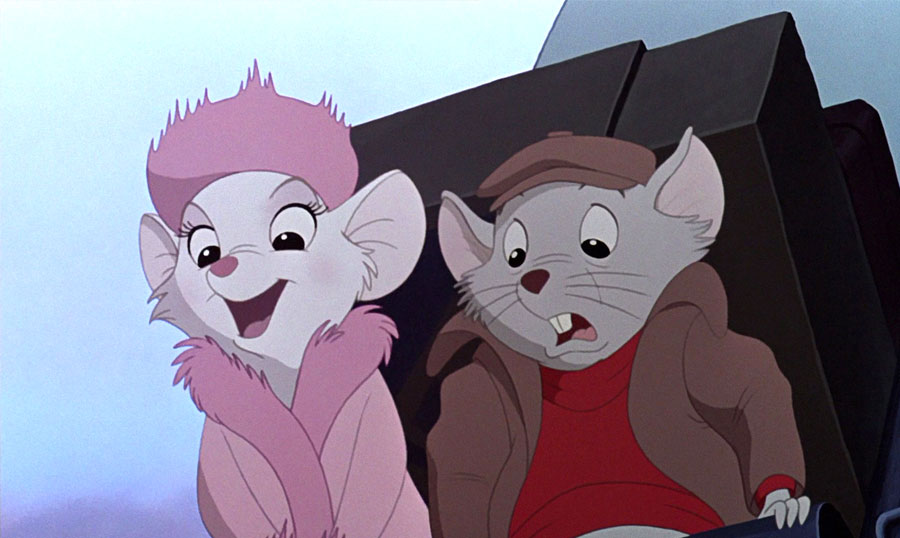
1. Disney’s First Sequel
The Rescuers Down Under marked the first time a sequel was produced for a full-length Disney animated feature film. Why did it take so long? Walt Disney was against creating sequels of any kind. This determination went all the way back to the Three Little Pigs animated short, which was a huge hit. After the lackluster results of subsequent Little Pigs cartoons, Walt was determined not to rest on his laurels again, famously saying, “You can’t top pigs with pigs.” His ambitions were much larger anyway – he was already thinking ahead to the idea of a full-length animated film. But that’s a story for another time!
2. Animation Innovations
In another historic first, The Rescuers Down Under was the first Disney feature to be entirely digitally animated, courtesy of the recently developed Computer Animation Production System (CAPS). In this method, the initial drawings were scanned into the computer, where they could be digitally inked and painted. The drawings were then composited with scanned backgrounds, allowing for greater flexibility in camera positioning, camera movements, multiplane effects, and other techniques.
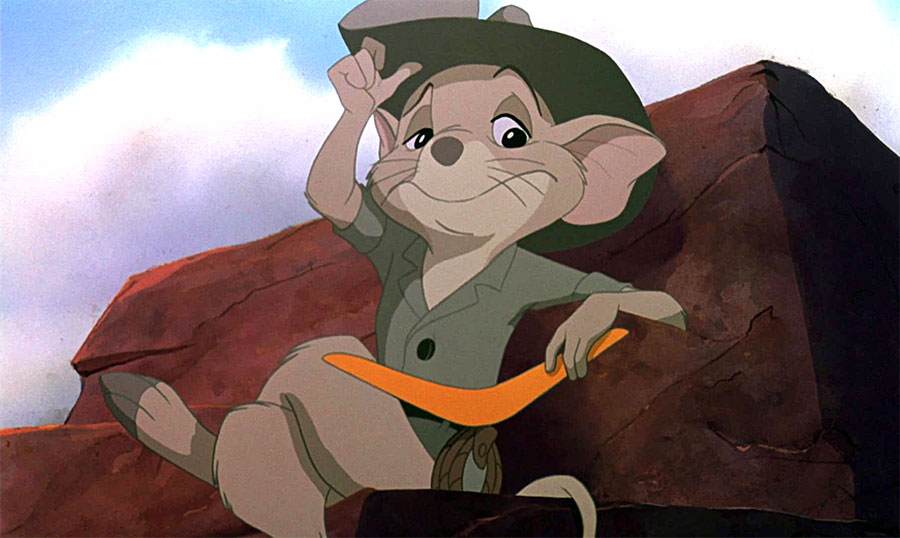
3. Where’s the Singing?
This is the second Disney animated feature not to include any musical numbers (setting aside the brief moment when Wilbur sings along to Black Slacks and McLeach sings a short snippet of “Home on the Range”), the first being The Black Cauldron.
4. That’s Just Plane Crazy
Speaking of Wilbur, he was named after Wilbur Wright of the Wright Brothers. This makes perfect sense as he is the brother of Orville from the first Rescuers film!
5. The Land Down Under
Members of the production team traveled to Australia to research the animals and scenery of the Australian Outback. They journeyed to Uluru, Katherine Gorge, and the Kakadu national parks.
6. Marahute
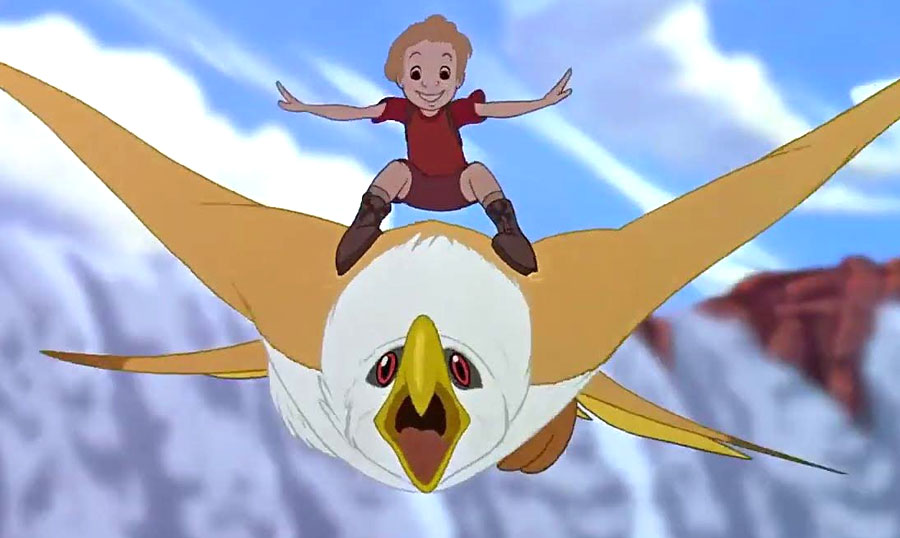
Glen Keane was the supervising animator for the eagle Marahute. To prepare for the task, he went to the Peregrine Fund in Boise, Idaho, where he studied six eagles. In addition, the Los Angeles Museum of Natural History loaned him a stuffed American eagle. Keane made Marahute’s wings larger than a real eagle and also slowed the bird’s wing movements to about a quarter of the speed typical of an eagle’s normal flight.
7. That’s A Lot of Feathers
Marahute sported over 200 feathers, making her rather difficult to animate. As a result, she only appears on-screen for about seven minutes.
8. A Little Help From Florida
The animators at the Disney-MGM Studios were enlisted to help finish the movie on schedule. This marked their first assignment on a Disney animated feature film, and the 70 artists animated ten minutes of film.
9. Real Life Inspirations
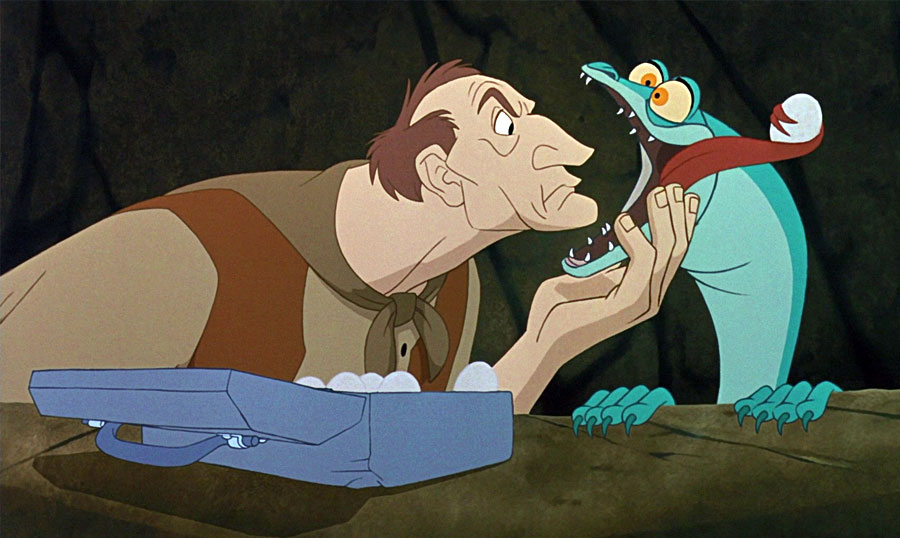
Supervising animator Mark Henn studied the mannerisms of Bob Newhart and Eva Gabor when it came time to animate Bernard and Miss Bianca. He was able to do this while they were recording their dialog. He wanted to do the same for George C. Scott in his role as McLeach, but rather than study him in person, he looked to Scott’s performance in the 1964 film Dr. Strangelove for inspiration.
10. Animals Animals Animals
Several members of the animation team traveled to the San Diego Zoo to study kangaroos, kookaburras, and snakes. At the same time, an iguana from Walt Disney World’s Discovery Island was brought into the studio to serve as a reference for Joanna.
Discover More Disney Magic in the Spring issue of Celebrations Disney Magazine!
Immerse yourself in the magic of Disney with features and pictorials on:
• The Disney Renaissance
• Zootopia: Better Zoogether!
• Finding Walt Disney in the Parks
• Winnie the Pooh
• Zootopia 2
and Much More!!
Click here to order!