10 Things You May Not Know About Cars

1. Riding Down Route 66
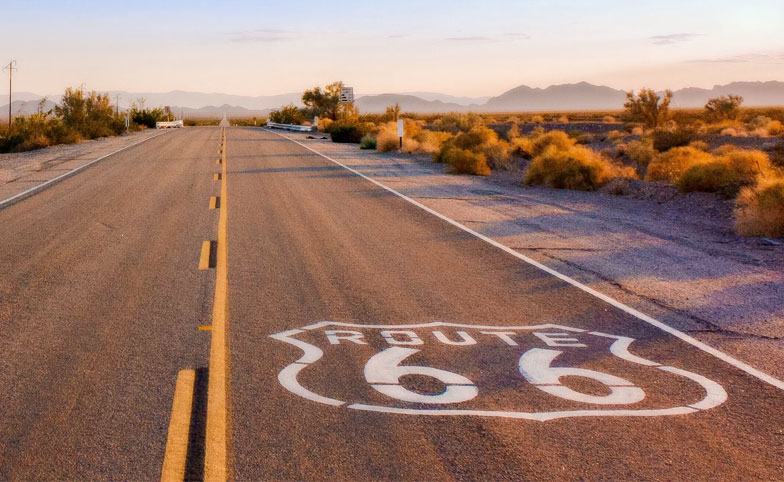
Inspiration for the film came from a cross-country road trip that John Lasseter took with his family in 2000. Upon his return, he sought out Michael Wallis, a Route 66 historian, who took a team of eleven Pixar animators on two different road trips along the legendary route.
2. Numbers
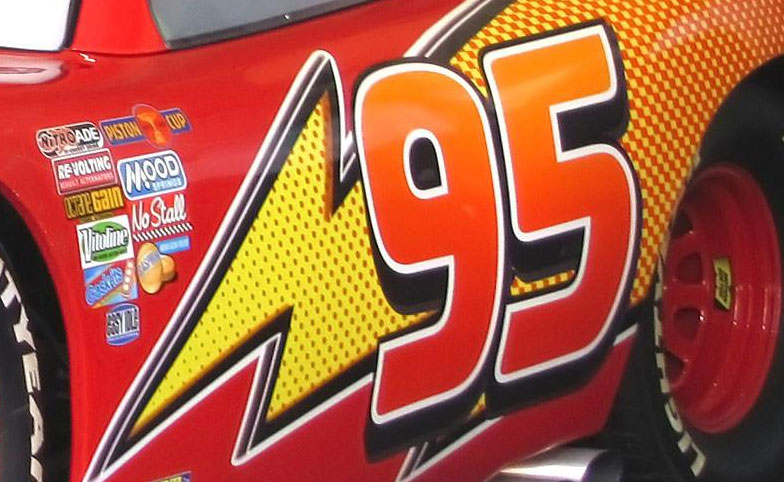
Lasseter and the team were so entranced by the experiences that they originally called the film Route 66. However, once they realized that there was a 1960s television series of the same name, the name was changed to Cars. Another change occurred with Lightning McQueen’s number. It was initially going to be 57, referring to 1957, the year Lasseter was born, but it was soon changed to 95 as an homage to the year that Toy Story was released. Similarly, Chick Hicks’s 86 refers to the year Pixar was founded.
3. Look Into My…Windshield?
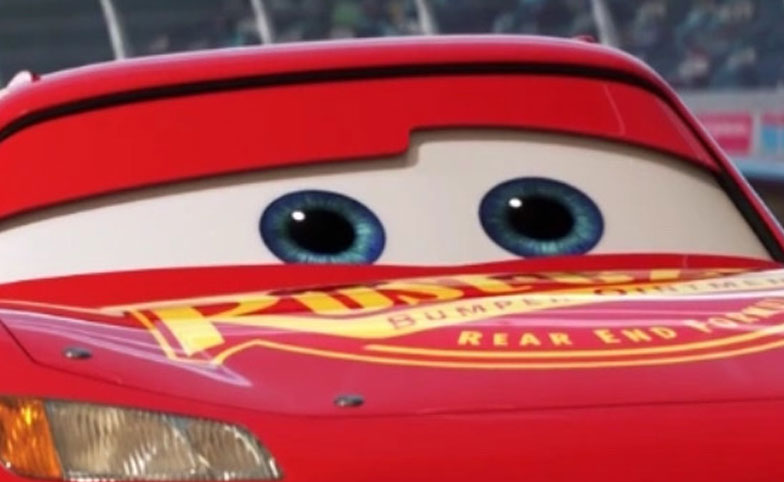
In the past, animators would traditionally draw anthropomorphized cars with eyes for headlights. However, for Cars, the eyes were placed on the windshield. This gave the characters a more human-like quality. After all, we humans see out the windshield of our vehicles. This approach also gave the animators more room to communicate expressiveness through the use of cleverly designed eyebrows and eyelids integrated into the windshield.
4. Painting the Cars
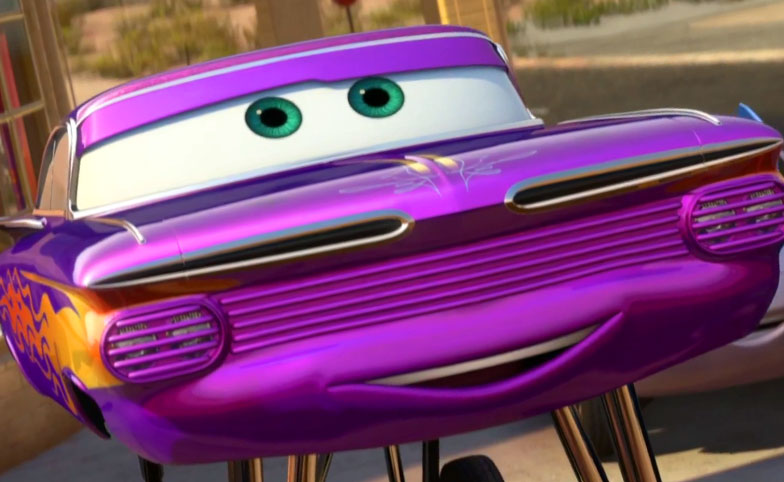
Cars presented the production team with a new challenge – how to realistically depict chrome and car paint. Character shading supervisor Thomas Jordan explained, “We started out…at the local body shop, and we saw the way they mixed the paint and applied the various coats. We figured out that we needed a base paint, which is where the color comes from, and the clearcoat, which provides the reflection. We were then able to add in things like metallic flake to give it a glittery sparkle, a pearlescent quality that might change color depending on the angle, and even a layer of pin-striping for characters like Ramone.”
5. Let’s Take a Moment To Reflect
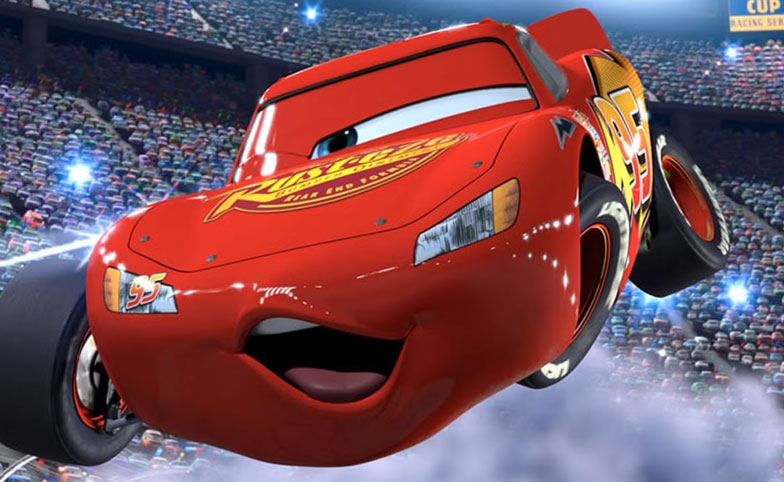
Rendering the many reflections also proved challenging. Simple environment maps had been used in earlier films to create basic reflections. Those were good enough for non-metallic objects, but a higher degree of accuracy was required for Cars. Ray tracing, a technique for modeling light allowing for reflections, soft shadows, depth of field, and so on, proved vital in this task. Lightning alone has fourteen different paint variations in the final film.
6. Ray Tracing
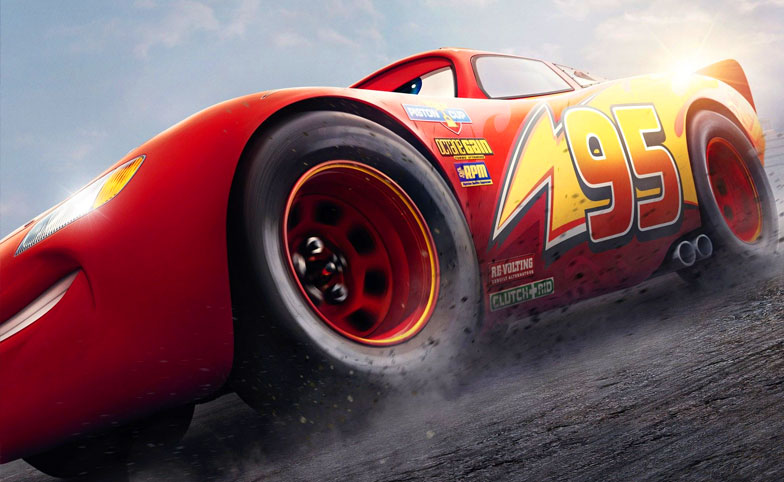
Ray tracing also allowed the design team to create realistic shadows from multiple light sources and to accurately render irradiance. An example of irradiance is when you have a red object next to a white wall. In this case, the light would be colored by the object, which would in turn cast a red glow on the wall. Ray tracing is a complex operation, and as a result, it took 17 hours to render a single frame of film. Yes, you read that right – one frame.
7. Keep Those Feet, er, Tires Planted To the Ground
In previous Pixar films, characters walked about with little regard to their environment. In Cars, however, the vehicles needed to firmly hug the road and take into account every bump and turn. To achieve that effect, Cars used a ground–locking system to keep the cars firmly planted on the road.
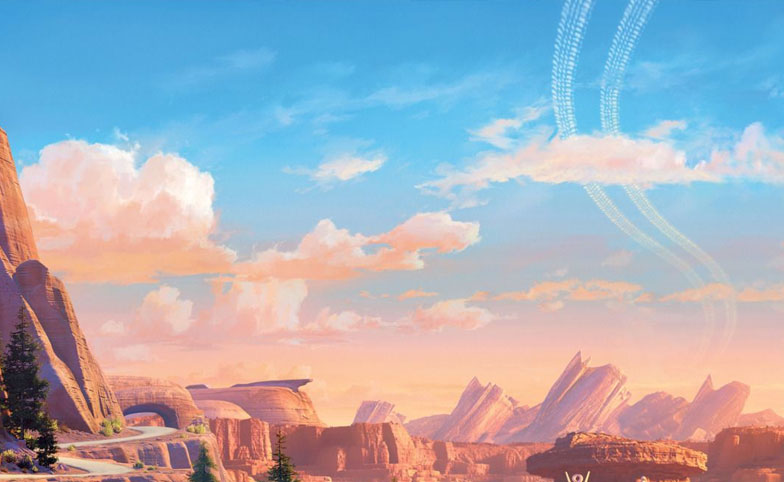
8. Up In the Clouds
Great care was taken in creating the environments seen in the film. Even the clouds got a unique look. You’ll see clouds shaped like a sedan, and jet trails resembling tire tracks.
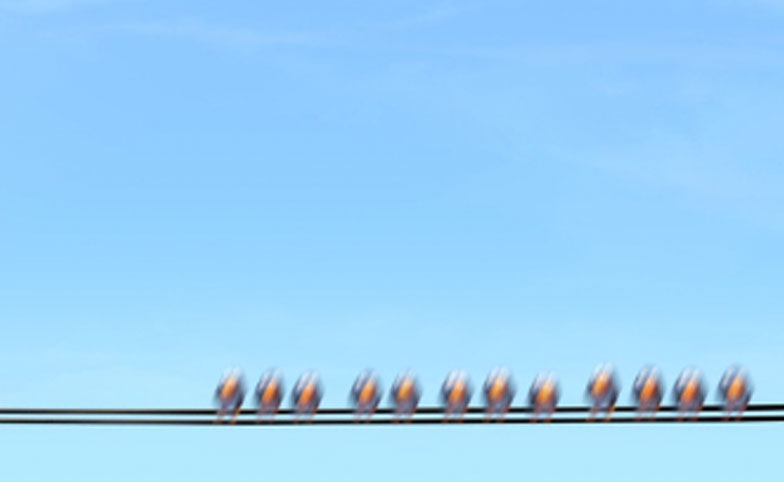
9. Easter Eggs
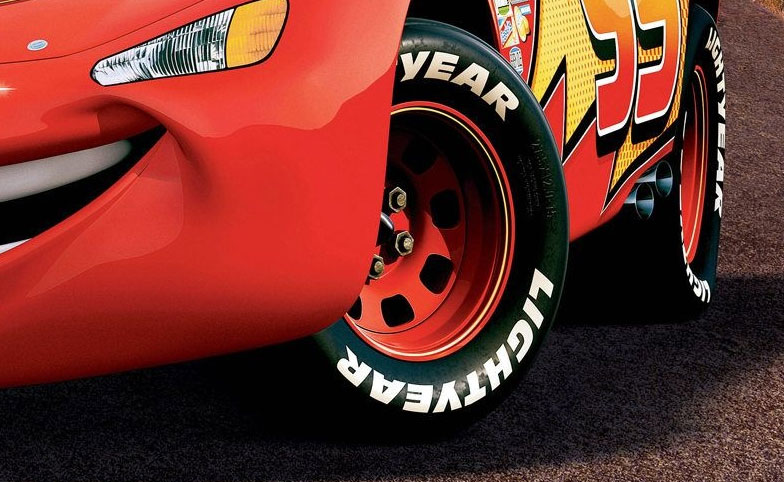
You’ll find plenty of Pixar references throughout the movie. For example, during the “Life is a Highway” sequence, look in the distance and see if you can spot the birds from For the Birds sitting on a telephone wire. You’ll also see the Pizza Planet delivery truck next to the Elvis camper in the crowd at the final race. A113 appears on Mater’s number plate, and Lightning’s tires are Lightyear tires, a punning reference to Goodyear and an allusion to one of our favorite Toy Story characters.
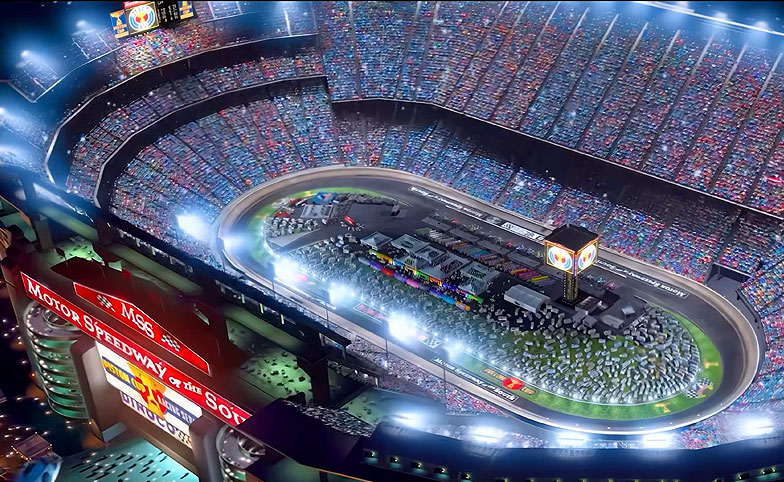
10. Make Room!
The opening race scene features 60,000 cars seated in the stands. Think that’s a lot? It’s nothing compared to the audience at Los Angeles International Speedway seen at the end of the film. Here you’ll see 100,000 cars in attendance to watch the climactic race between Lightning, Chick Hicks, and The King!
Discover More Disney Magic in the Spring issue of Celebrations Disney Magazine!
Immerse yourself in the magic of Disney with features and pictorials on:
• The Disney Renaissance
• Zootopia: Better Zoogether!
• Finding Walt Disney in the Parks
• Winnie the Pooh
• Zootopia 2
and Much More!!
Click here to order!